The short answer
Federal contracts can significantly impact your business. Focus on opportunities that align with your firm's strengths and goals. Prioritize contracts with clear requirements that you can meet or exceed, and use established resources to guide your journey.
Key Takeaways
- Evaluate contracts based on your business strengths.
- Research current federal contracting opportunities.
- Understand the bidding process and requirements.
- Focus on contracts that align with your business goals.
- Use available resources to streamline your efforts.
Choosing which federal contracts to pursue can transform your business. Focus on opportunities that align with your firm’s strengths and goals. Prioritize contracts with clear requirements that you can meet or exceed, and rely on established resources to guide your journey.
What types of federal contracts are available for small businesses?

Federal contracts offered to small businesses typically include set-asides, sole-source contracts, and multiple award contracts. These are designed to level the playing field against larger competitors. Set-asides reserve a portion of contracts exclusively for small businesses. Sole-source contracts are awarded without a competitive bidding process when only one supplier can fulfill the need. Multiple award contracts allow several vendors to supply the same goods or services.
Each type offers distinct advantages. Set-asides ensure small businesses have access to government contracts, fostering competition. Sole-source contracts can expedite the procurement process, beneficial for businesses with niche offerings. Multiple award contracts provide ongoing opportunities, as they pool vendors for efficiency. Understanding these types helps small businesses identify contracts that best match their capabilities.
How do I find federal contracts that match my business capabilities?
To find federal contracts that align with your business capabilities, utilize platforms like FedBizOpps and GovWin. These platforms list available opportunities tailored to various industries, making it easier to find suitable contracts.
Additionally, the SBA – Small Business Administration provides guidance on understanding the federal marketplace. Regularly checking these platforms ensures you’re aware of new opportunities that match your business profile. By aligning your capabilities with available contracts, you increase your chances of winning bids and growing your business.
What are the steps to bid on federal contracts?
Bidding on federal contracts involves several key steps. First, register your business in the System for Award Management (SAM). Next, identify potential contracts through resources like FedBizOpps. After selecting suitable contracts, submit a proposal detailing how your business can meet or exceed contract requirements.
1. Register your business in SAM.
2. Identify potential contracts.
3. Prepare your proposal.
4. Submit your proposal.
5. Monitor the evaluation process.
Follow these steps diligently to handle the bidding process effectively. Each step is critical in securing contracts and expanding your business reach. For instance, preparing a compelling proposal involves understanding the agency’s needs, crafting a clear narrative of your capabilities, and demonstrating past performance.
What are the common requirements for federal contracts?
Federal contracts often require businesses to meet specific criteria such as being registered in SAM, possessing necessary certifications, and complying with federal regulations. Understanding these requirements is essential to qualify for federal business opportunities.
Common requirements also include financial stability, previous contract performance, and the ability to meet technical specifications. By thoroughly preparing and ensuring compliance, businesses can effectively compete for federal contracts and enhance their reputation in the federal marketplace. For example, demonstrating financial stability might involve providing detailed financial statements and proof of adequate bonding capacity.
How can I determine if a federal contract is worth pursuing?
Determining if a federal contract is worth pursuing requires evaluating the contract’s alignment with your business capabilities and goals. Consider factors such as potential revenue, resource requirements, and contract duration. Assess whether the contract aligns with your long-term business strategy.
A cost-benefit analysis can help identify if the potential gains outweigh the investment. This ensures you focus efforts on contracts that contribute positively to your business growth and sustainability. For example, if a contract demands significant upfront investment in equipment or personnel, weigh these costs against the projected revenue to decide if it’s a strategic fit.
Which federal contracts to pursue based on industry trends?
Choosing which federal contracts to pursue should be informed by industry trends. Current trends indicate growing opportunities in sectors like technology, healthcare, and infrastructure. These sectors are prioritized due to evolving government needs and increased funding.
By aligning your business offerings with these trends, you position yourself favorably in the federal marketplace. Stay informed on federal contracting strategies to leverage emerging opportunities effectively. For instance, the increased focus on cybersecurity has led to more federal contracts in IT security, presenting opportunities for businesses with relevant expertise.
What are the risks involved in federal contracting?
Entering the federal contracting arena comes with its own set of risks. One significant risk is compliance with stringent government regulations, which can lead to penalties if not adhered to properly. Additionally, the competitive nature of federal contracting can mean investing significant resources into a bid without a guarantee of winning.
Another risk involves the possibility of scope changes during the contract execution, which can impact timelines and budgets. Businesses must be prepared to manage these changes effectively to maintain profitability. Understanding these risks and developing strategies to mitigate them is crucial for success in federal contracting.
What resources are available to help me understand federal contracting opportunities?
Several resources are available to aid in understanding federal contracting opportunities. The SBA – Small Business Administration provides essential guides and support for small business owners entering the federal marketplace. Platforms like GovWin offer insights into upcoming contracts and industry trends.
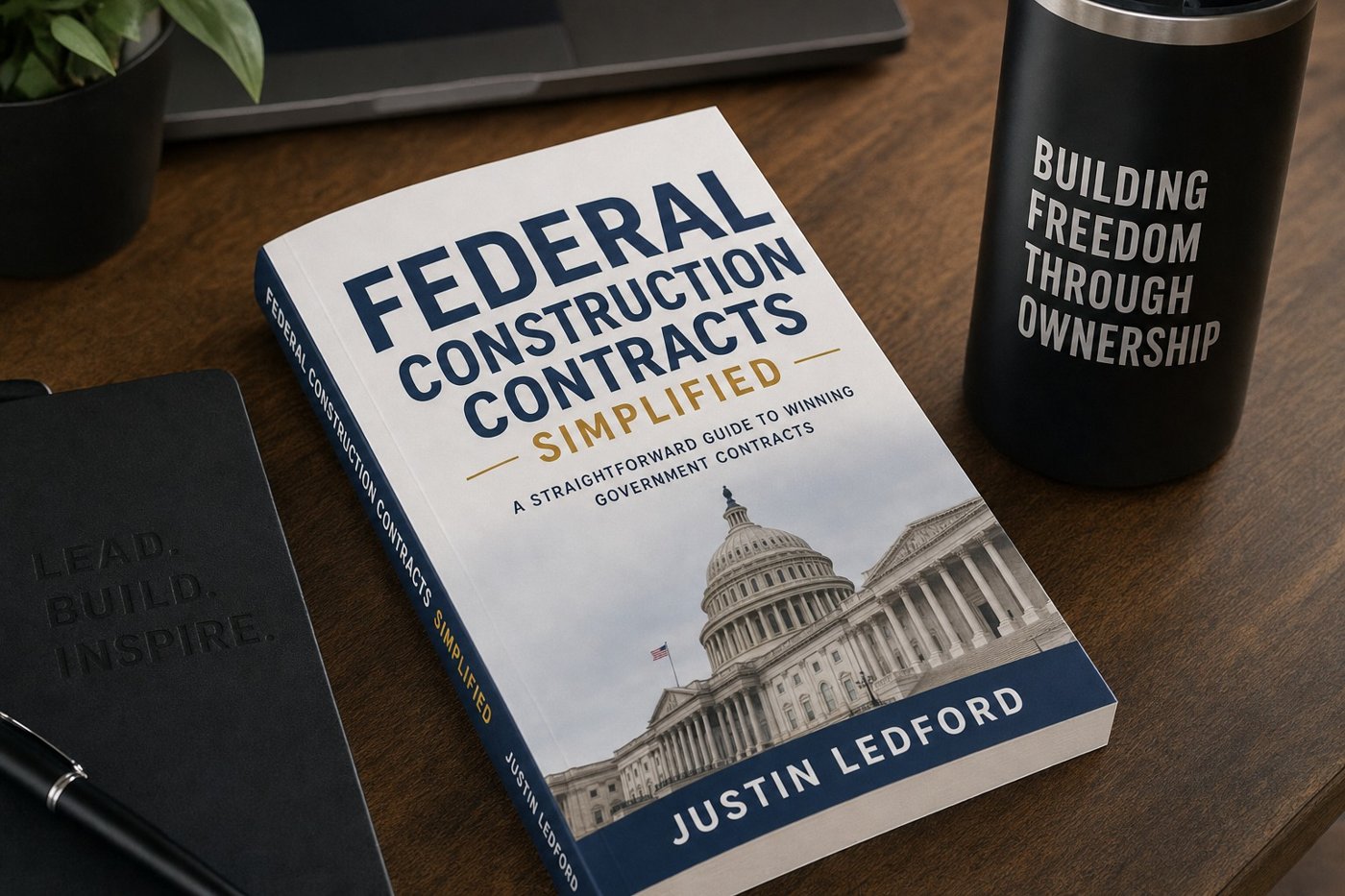
Additionally, Justin Ledford’s learning programs and his book on federal contracts provide valuable insights and strategies from a seasoned expert. Leveraging these resources can significantly enhance your understanding and ability to secure federal contracts. For example, Justin’s programs offer practical advice on proposal writing and handling the complexities of federal procurement.
| Contract Type | Eligibility | Potential Revenue | Bidding Complexity |
|---|---|---|---|
| Set-Asides | Small businesses | Medium | Low |
| Sole-source Contracts | Niche suppliers | High | Low |
| Multiple Award | Several vendors | Varies | High |
Take the Next Step Towards Securing Federal Contracts
Are you ready to take advantage of federal contracts for your business? It’s time to take actionable steps. Explore Justin’s learning programs and get the book on federal contracts now to equip yourself with the knowledge and strategies needed to succeed. Start learning today and position your business for growth in the federal marketplace.
Frequently Asked Questions
What types of federal contracts are available for small businesses?
Small businesses can access a range of federal contracts, including set-asides specifically designed for them. These contracts often focus on services and products that small businesses can provide to meet government needs.
What are the common requirements for federal contracts?
Common requirements include having a DUNS number, registering in the System for Award Management (SAM), and meeting specific performance and capabilities criteria outlined in the solicitation.
What are the steps to bid on federal contracts?
To bid on federal contracts, first identify opportunities on platforms like SAM. Next, prepare your proposal by addressing the requirements, then submit it before the deadline. Make sure to follow all instructions carefully.
How can I determine if a federal contract is worth pursuing?
Assess the contract’s value, your capacity to fulfill its requirements, and its alignment with your business objectives. Contracts that promise a good return on investment and align with your strengths are worth pursuing.
How do I find federal contracts that match my business capabilities?
Use government contracting websites, such as SAM and FedBizOpps, to filter opportunities based on your capabilities and industry. Networking with other contractors can also provide insights into available contracts.
What resources are available to help me understand federal contracting opportunities?
Resources include the SBA’s contracting programs, local SCORE chapters for mentoring, and various online training platforms that offer insights into federal contracting processes and strategies.